



























































Thông báo

CẢM ƠN QUÝ KHÁCH ĐÃ ĐẶT LỊCH KHÁM TẠI AIH.
Quý khách có muốn đăng ký thông tin trước không?
Vui lòng điền vào thông tin bên dưới
Khẩn cấp
THE SCARY TRUTH BEHIND THE SEEMINGLY HARMLESS “REFLUX” ATTACK
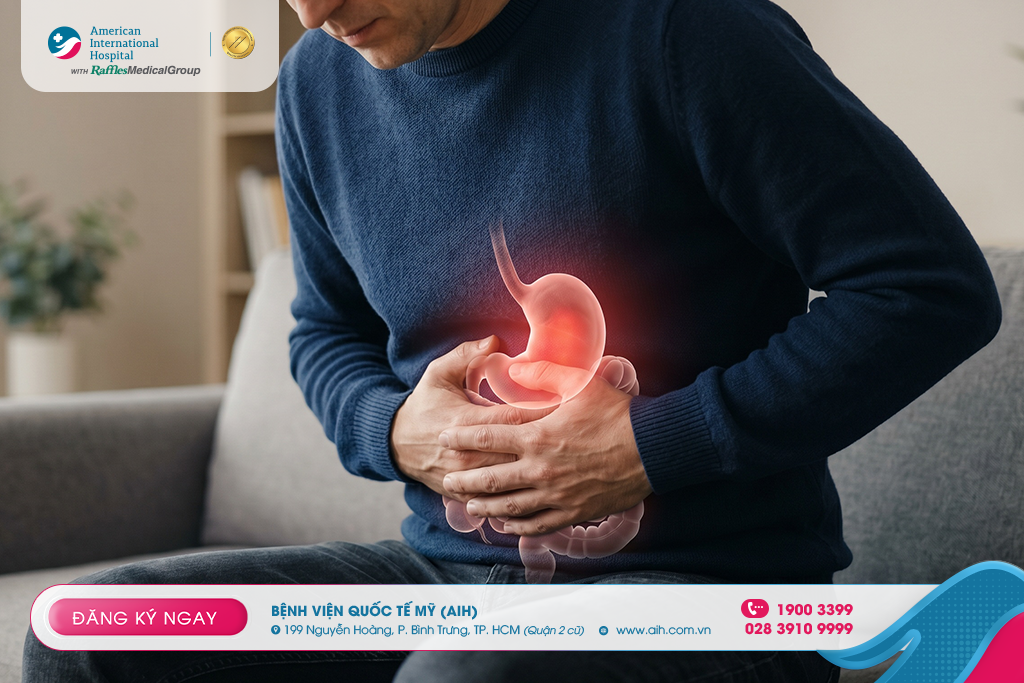
Not all retrosternal burning sensation is caused by reflux
“I’ve had reflux for years.”
This is a statement that gastroenterologists frequently hear from patients during consultations.
However, according to Dr. Mai Vien Phuong, Master’s Degree, after taking a medical history, conducting a thorough physical examination, and performing necessary tests, quite a few cases are determined not to be caused by gastroesophageal reflux disease (GERD).
In reality, a retrosternal burning sensation, heartburn, chest pain, or chest discomfort is merely a symptom, not a diagnosis.
Just as a fever can be caused by the flu, pneumonia, or a urinary tract infection, a retrosternal burning sensation can also stem from various medical conditions.
If these causes are confused, patients may take acid-reducing medications for months or even years without any improvement in their symptoms, while missing the opportunity for correct treatment from the outset.
Therefore, according to Dr. Mai Vien Phuong, an accurate diagnosis is always the most critical step before choosing the appropriate and effective treatment plan.
1. Gastroesophageal reflux disease
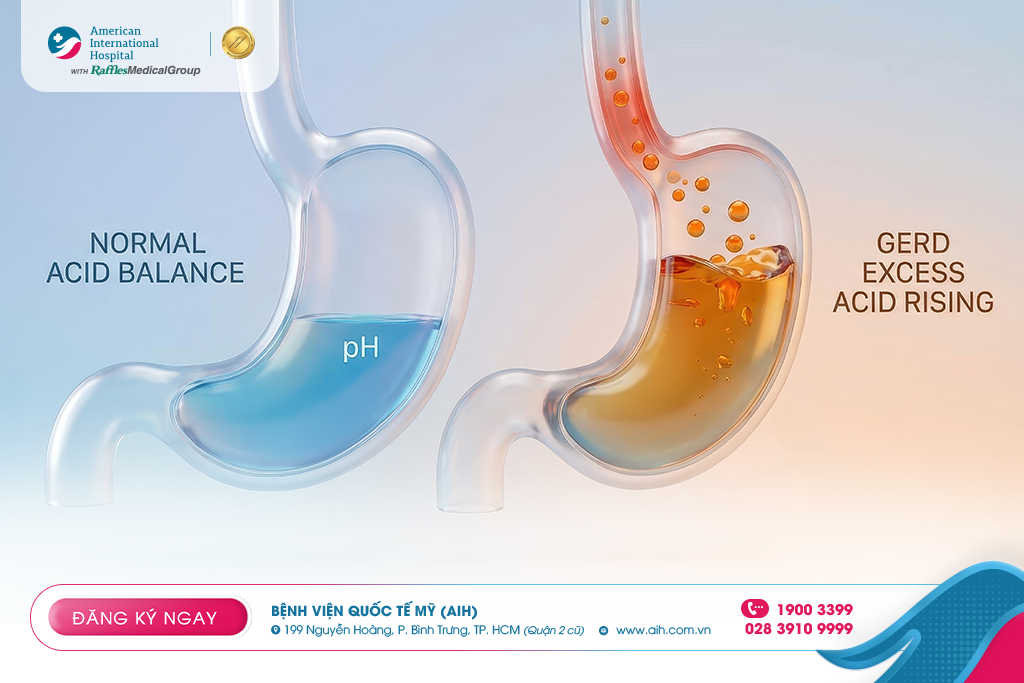
This is the most common condition and the primary cause physicians consider when a patient complains of a retrosternal burning sensation or sour regurgitation.
In this condition, gastric contents reflux into the esophagus with greater frequency or severity than normal. Acid and other components in the gastric juice irritate the esophageal mucosa, causing a burning sensation.
Patients typically experience the following symptoms:
A retrosternal burning sensation.
Sour regurgitation.
Heartburn.
Symptoms worsen after a heavy meal or when lying down.
Endoscopy may reveal esophagitis, but in many cases, the endoscopy results are entirely normal.
2. Reflux without esophageal damage
Many people suffer from reflux, yet an endoscopy reveals absolutely no inflammation.
This leads them to believe they do not have the condition.
In reality, there are still cases where acid or gastric contents reflux into the esophagus without causing mucosal damage yet.
Patients still experience a burning sensation, heartburn, or sour regurgitation just like those with esophagitis.
To make an accurate diagnosis, doctors sometimes need to prescribe a esophageal 24-hour pH-impedance monitoring.
Diagnosing esophageal disorders requires a combination of multiple factors tố
3. Esophageal Hypersensitivity
In this group of patients, the amount of refluxed acid may not be large, but the esophagus becomes abnormally sensitive to stimuli. Even a very small amount of acid or refluxate can cause a distinct burning sensation or discomfort.
Patients typically experience:
Proper treatment yielding little improvement.
Nearly normal endoscopy results.
Persistence of symptoms even though acid levels have been controlled.
Continuing to simply increase the dose of acid-reducing medications is usually ineffective.
4. Functional Heartburn
This condition is very easily confused with reflux.
Patients still experience a retrosternal burning sensation.
Symptoms may occur daily.
However, when specialized tests are performed, doctors find that:
Esophageal acid levels are normal.
Symptoms are not related to reflux episodes.
There is no mucosal damage.
The cause is believed to be related to alterations in how the brain and esophagus process pain perception.
The treatment for this condition is completely different from that of reflux disease.
5. Esophageal Motility Disorders
The esophagus functions through rhythmic contractions that propel food down into the stomach.
If this coordination is disrupted, patients may experience:
Chest pain.
Difficulty swallowing.
A feeling of food getting stuck.
Postprandial discomfort.
Many people think they have reflux, but the actual problem lies in esophageal motility and contractions.
Esophageal manometry is a crucial test to help diagnose this group of conditions.
6. Eosinophilic Esophagitis
This is a chronic inflammatory condition of the esophagus related to an immune response.
Patients may experience:
Difficulty swallowing.
Food easily getting stuck.
Pain behind the breastbone.
No improvement with acid-reducing medication treatment.
Endoscopy sometimes reveals only very subtle changes.
To make a definitive diagnosis, doctors need to perform an esophageal mucosal biopsy.
7. Medication-Induced Esophagitis
Certain medications can cause esophageal injury if not taken properly.
For example:
Certain antibiotics.
Osteoporosis medications.
Anti-inflammatories, pain relievers.
Certain iron or potassium supplements.
Patients typically develop a retrosternal burning pain after taking medication.
Taking a thorough medication history helps physicians quickly suspect this cause.
8. Hiatal Hernia
A hiatal hernia does not always cause symptoms.
However, when the upper part of the stomach slides up into the thorax, the natural anti-reflux mechanism can be impaired.
Patients are prone to:
Prolonged reflux.
Difficult-to-control treatment.
Recurrent symptoms.
This is also one of the reasons why some individuals must consider interventional treatment or surgery.
9. Cardiovascular Disease
This is an especially important cause.
Pain from cardiac conditions can sometimes closely mimic esophageal pain.
Patients may experience:
Pain behind the breastbone.
A burning sensation.
Pain radiating to the neck or shoulders.
If chest pain occurs during exertion, accompanied by shortness of breath, sweating, or pain radiating to the left arm, you must seek medical attention immediately to rule out cardiovascular disease before considering gastrointestinal disorders.
10. Other Medical Conditions
In addition to the aforementioned conditions, reflux-like symptoms can also be encountered in:
Gastric ulcers.
Gastritis.
Esophageal spasm.
Early-stage esophageal cancer.
Certain biliary tract disorders.
Certain respiratory conditions.
Therefore, physicians must always conduct a comprehensive evaluation rather than relying on a single symptom.

Why is an accurate differentiation necessary?
Dr. Mai Vien Phuong, Master’s Degree, states that many medical conditions can cause symptoms similar to gastroesophageal reflux disease, yet their underlying causes are completely different.
Therefore, the treatment approaches are also dissimilar.
If esophageal hypersensitivity is mistaken for acid reflux, patients may have to take acid-suppressing medications for prolonged periods with very limited effectiveness.
If an esophageal motility disorder is misdiagnosed as reflux, the treatment will also head in the wrong direction.
Conversely, when the correct diagnosis is made, physicians can choose the appropriate treatment plan right from the outset, helping patients improve their symptoms more quickly and avoid unnecessary medication use.
Do not self-diagnose based solely on symptoms
Nowadays, a great deal of information regarding gastroesophageal reflux disease is shared on social media. Consequently, upon experiencing a retrosternal burning sensation, quite a few people immediately assume they have reflux and purchase medication on their own.
However, similar symptoms do not equate to having the same condition. A burning sensation behind the breastbone can be a manifestation of various medical conditions, each with its own underlying causes and specific treatment pathways.
According to specialists, self-diagnosis and prolonged medication use not only fail to improve symptoms but also delay the accurate detection of the disease.
Therefore, if symptoms persist, recur frequently, or fail to respond to initial treatment, patients should consult a gastroenterologist for a comprehensive evaluation, accurate diagnosis, and the selection of an appropriate treatment plan.
At the Department of Gastroenterology – American International Hospital (AIH), we understand that the same symptom can stem from completely different medical conditions. Therefore, the goal is not merely to alleviate symptoms, but more importantly, to identify the exact cause in order to establish a tailored treatment regimen for each patient.
During consultations, physicians always take the time to listen and thoroughly evaluate the medical history, ranging from symptom characteristics, lifestyle habits, and dietary patterns to stress levels and the impact of the condition on daily life. Some people suffer from insomnia due to nighttime burning behind the breastbone, others hesitate to share meals with family out of fear of symptom recurrence, and many feel anxious because months of treatment have yielded no improvement. This information serves as a crucial foundation for physicians to gain a comprehensive perspective and formulate a more accurate diagnostic approach.
Combined with the high-resolution Olympus endoscopy system, modern functional diagnostic apparatuses, and experience in diagnosing and treating esophageal and gastric disorders, the Department of Gastroenterology – American International Hospital (AIH) can assist in differentiating conditions such as gastroesophageal reflux disease (GERD), non-erosive reflux disease (NERD), esophageal hypersensitivity, functional heartburn, esophageal dysmotility, and various other pathologies with similar manifestations.
When the exact cause is accurately identified, treatment becomes more effective and appropriate, while helping to minimize unnecessary medication use, reduce the risk of prolonged treatment, and support patients in returning to their normal daily activities sooner.
Advice for patients
A retrosternal burning sensation is a symptom, not a disease.
Many different medical conditions can cause symptoms similar to reflux.
Treatment is only effective when the exact cause is identified.
Patients should not prolong self-medication if symptoms do not improve.
Consulting a gastroenterologist helps achieve an accurate diagnosis and select a treatment approach tailored to each individual patient.
References
Gyawali CP, Kahrilas PJ, Savarino E, Zerbib F, Mion F, Smout AJPM, et al. Modern diagnosis of gastroesophageal reflux disease: the Lyon Consensus 2.0. Gut. 2024;73(2):361–371.
Aziz Q, Fass R, Gyawali CP, Miwa H, Pandolfino JE, Zerbib F. Esophageal disorders. In: Drossman DA, Chang L, Chey WD, Kellow J, Tack J, Whitehead WE, editors. Rome IV: Functional Gastrointestinal Disorders – Disorders of Gut–Brain Interaction. 4th ed. Raleigh (NC): Rome Foundation; 2016.
--------------------

![[ĐĂNG KÝ MIỄN PHÍ] CƠ HỘI TƯ VẤN CÙNG CHUYÊN GIA UNG BƯỚU QUỐC TẾ TẠI AIH](https://aih.com.vn/storage/event-dr-yasuo-150x150.png)

Để lại bình luận