


























































Thông báo

CẢM ƠN QUÝ KHÁCH ĐÃ ĐẶT LỊCH KHÁM TẠI AIH.
Quý khách có muốn đăng ký thông tin trước không?
Vui lòng điền vào thông tin bên dưới
Khẩn cấp
INFLAMMATORY BOWEL DISEASE: CAUSES, SYMPTOMS, AND EFFECTIVE DISEASE MANAGEMENT

Inflammatory Bowel Disease (IBD) is a group of common chronic gastrointestinal conditions, including Crohn’s disease and ulcerative colitis. This is an autoimmune disorder in which the immune system mistakenly attacks healthy tissues in the intestines, leading to prolonged inflammation and mucosal damage.
Understanding the causes, symptoms, and management of IBD helps patients control the disease effectively, prevent complications, and improve quality of life.
Causes
The exact cause of IBD has not yet been identified, but the following factors may play an important role:
Genetics: People with family members suffering from IBD are at higher risk.
Environment: Diet, stress levels, smoking, and other environmental factors may increase the risk.
Gut bacteria: An imbalance of gut microbiota may trigger an inflammatory response.
Immune system: Abnormal immune reactions against normal microorganisms in the gut may cause prolonged inflammation.
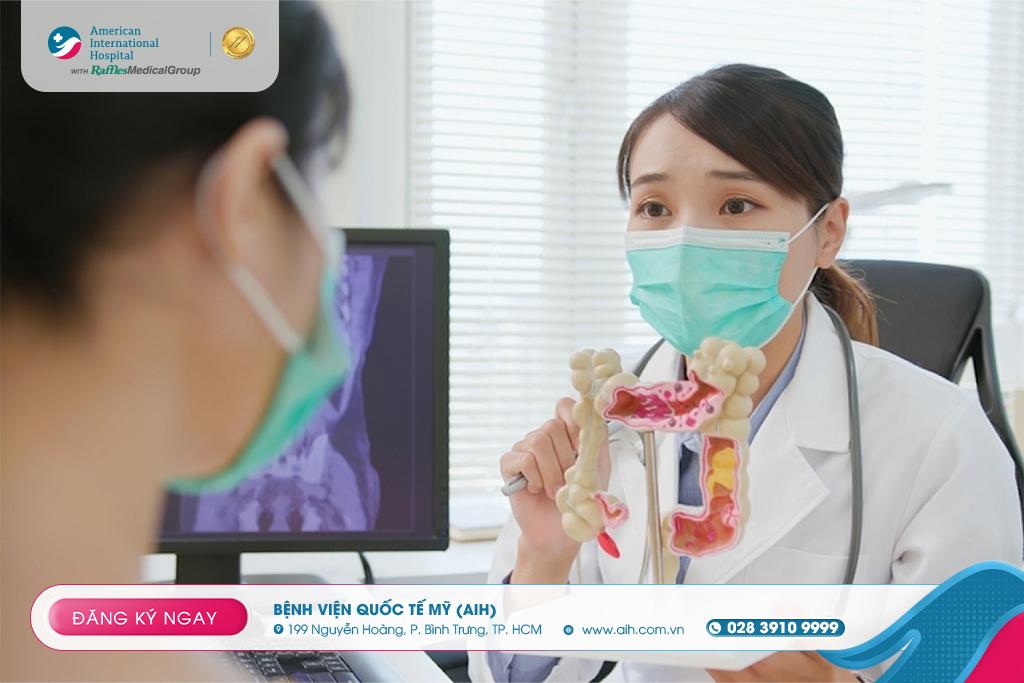
Symptoms
The symptoms of IBD often vary depending on the type of disease and severity:
Persistent diarrhea or blood in stool
Abdominal pain and cramps
Unexplained weight loss
Prolonged fatigue
Fever and anemia in severe cases

Diagnosis and treatment
IBD is diagnosed based on a combination of clinical examination, blood tests, endoscopy, and imaging. Differentiating between Crohn’s disease and ulcerative colitis is highly important in selecting the appropriate treatment regimen.
Currently, IBD has no absolute cure, but it can be effectively controlled by:
Anti-inflammatories and immunosuppressives
Biologic drugs for severe cases
Dietary and lifestyle adjustments
Surgery, when medications can’t control the symptoms or complications occur
Diagnostic methods
IBD often occurs suddenly with symptoms. To diagnose, doctors may use a combination of the following methods:
Clinical examination: Assessing symptoms and medical history.
Blood test: Checking for signs of inflammation and anemia.
Endoscopy: Direct observation of the intestinal mucosa and biopsy.
Imaging: Using CT scan or MRI to assess the extent of damage.

Treatment methods
Currently, IBD has no absolute cure, but it can be effectively controlled with:
Anti-inflammatories and immunosuppressives: Helps reduce inflammation and control the immune response.
Biologics: Used for severe cases, especially Crohn’s disease.
Antibiotics: Useful in mild to moderate Crohn’s disease and in treating complications like abscesses and anal fistulas.
Surgery: Considered when medications cannot control symptoms or complications occur.
Long-term management
Regular follow-up and personalized treatment are very important in IBD management. Patients should maintain contact with gastroenterologists to manage symptoms, prevent complications, and maintain quality of life.
Treatment of inflammatory bowel disease and digestive diseases with AIH specialists
At American International Hospital (AIH), a team of experienced gastroenterologists always accompanies patients in diagnosing and treating complicated gastrointestinal conditions, including ulcerative colitis and Crohn’s disease. The doctors in the Gastroenterology – Hepatology Department at AIH are not only exceptionally skilled but also extensively trained in endoscopy and contemporary techniques, guaranteeing safe, efficient, and individualized care for every patient.
Modern endoscopy services
AIH provides comprehensive endoscopy services, including colonoscopy, esophagogastroduodenoscopy, and capsule endoscopy, allowing direct observation of the intestinal mucosa and accurate biopsy sampling when necessary. New-generation endoscopic equipment helps minimize discomfort, improve accuracy, and shorten recovery time.
Personalized treatment regimen
Doctors at AIH develop personalized treatment regimens for each IBD patient, combining immunosuppressive drugs, modern biologics, and surgical interventions when needed. The treatment process is closely monitored, ensuring optimal effectiveness and minimizing complications, delivering international-standard quality care.
Prevention of inflammatory bowel disease (IBD)
Prevention of IBD mainly focuses on effective disease control, recurrence prevention, and complication reduction. The following are key recommendations:
Adherence to treatment: Take medications as prescribed to control inflammation and prevent recurrence.
Proper diet: Avoid trigger foods, supplement omega-3, vitamin C, and polyphenols from natural foods.
Stress management: Practice meditation and yoga to reduce stress.
Physical activity: Gentle exercise such as walking, swimming, and yoga helps improve bowel peristalsis and reduce stress.
Quit smoking: Smoking worsens Crohn’s disease, increases risks of flare-ups, intestinal strictures, and reduces medication effectiveness.
Full vaccination: Especially against influenza, pneumonia, hepatitis B, HPV, shingles, and COVID-19. People using immunosuppressants should avoid live vaccines.
Regular health check-ups: Visit gastroenterologists as scheduled, and undergo general health checks, cancer screening, and bone density testing if using steroids long-term.


Để lại bình luận