























































Notification

THANK YOU FOR MAKING AN APPOINTMENT AT AIH.
Would you like to pre-register?
Please fill in the information below
Urgent
ANXIETY AND GASTROESOPHAGEAL REFLUX: WHICH COMES FIRST? NEW RESEARCH REVEALS THE ANSWER

Many people suffer from reflux, but the more anxious they are, the worse the condition becomes.
“Every time I have work pressure, I get heartburn.”
“Whenever I suffer from insomnia, the burning sensation behind my sternum occurs more frequently.”
“I have visited the doctor many times without finding severe damage, yet the symptoms persist.”
According to Dr. Mai Vien Phuong, Master’s Degree, Head of the Gastrointestinal Endoscopy Unit at the American International Hospital (AIH), these are very common scenarios for individuals suffering from gastroesophageal reflux disease (GERD). For years, physicians have observed that anxiety and GERD frequently co-occur, yet a crucial question remains: Does anxiety exacerbate reflux disease, or does chronic reflux cause patients to become anxious?
A study utilizing modern genetic analysis methods has provided additional evidence to address this issue. The results indicate that the connection between GERD and anxiety is not merely a coincidence, but rather a bidirectional relationship in which each condition can influence and aggravate the other.
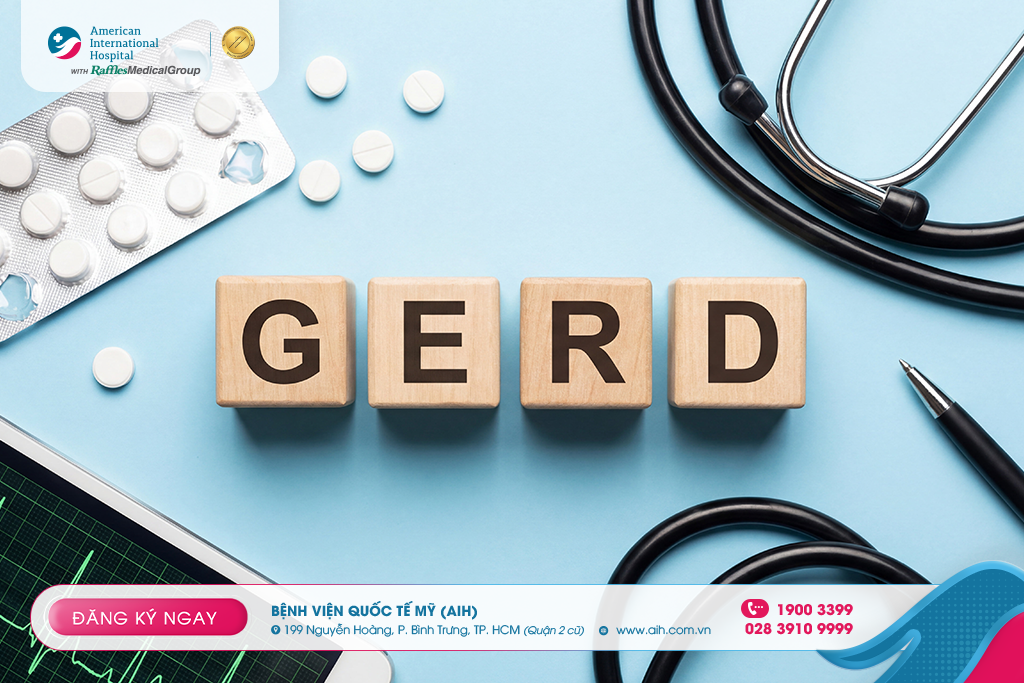
What is gastroesophageal reflux?
GERD is a medical condition in which gastric juices from the stomach flow back up into the esophagus, causing symptoms such as:
Heartburn.
Sour regurgitation.
Retrosternal burning.
Globus sensation.
Persistent cough. Hoarseness.
The majority of patients respond well to lifestyle modifications and medication. However, there remains a group of individuals whose symptoms persist or frequently recur despite proper treatment.
What is anxiety disorder?
Anxiety disorders are not merely the feeling of nervousness before an exam or an important meeting. This is a prolonged, uncontrollable state of anxiety that interferes with daily life.
Patients may experience:
Constant stress.
Palpitations, rapid heartbeat.
Difficulty sleeping.
Trouble concentrating.
Persistent negative thoughts.
Notably, anxiety affects not only mental well-being but also impacts various organs in the body, particularly the digestive system.
What do new studies reveal?
The study uses the Mendelian Randomization method, an analytical technique based on genetic data. Instead of merely observing whether two diseases occur together, this method helps evaluate whether a causal relationship exists between them.
The results show that:
Individuals with genetic factors that increase the risk of GERD also have a higher risk of developing anxiety disorders.
Conversely, genetic factors associated with anxiety disorders also increase the risk of GERD.
This suggests that the two conditions may influence each other bidirectionally, rather than just one being the cause of the other.
Why can anxiety make reflux symptoms worse?
According to Dr. Mai Vien Phuong, the brain and the digestive system are always closely connected through a neural, endocrine, and immune network, known as the gut-brain axis.
"When a person experiences prolonged stress or anxiety, the brain can affect the functioning of the esophagus and stomach. At the same time, the pain perception threshold also changes, causing patients to feel a greater burning sensation or discomfort, even when the amount of refluxed acid is not large. In other words, the digestive system becomes more sensitive to very minor stimuli. That is why some people experience only mild reflux, yet their symptoms are very pronounced and significantly impact their quality of life."
Anxiety changes daily habits
Prolonged stress also causes many people to:
Eat irregularly.
Eat too quickly.
Drink a lot of coffee or energy drinks.
Stay up late.
Exercise infrequently.
Smoke or excessive alcohol consumption.
These are all factors that have been proven to cause GERD symptoms to occur more frequently.

Prolonged reflux can also cause patients to feel anxious
According to Dr. Mai Vien Phuong, the relationship between reflux and anxiety is not a one-way street.
If a person experiences a retrosternal burning sensation almost daily, loses sleep due to heartburn, or constantly fears the recurrence of symptoms after every meal, they may gradually become stressed and anxious.
Some individuals even develop a fear of eating, believing that any food could trigger reflux. Excessive dietary restriction not only impacts nutrition but also diminishes their quality of life.
Therefore, prolonged GERD is not merely an esophageal disorder, but can also significantly impact mental health.
Why do some people experience severe discomfort even though their endoscopy results are nearly normal?
This is a question that many patients wonder about.
The degree of lesion observed on endoscopy does not always accurately reflect the severity of symptoms.
Some individuals have quite severe esophagitis yet experience little pain.
Conversely, others have almost no visible lesions but suffer from prolonged burning and pain.
One of the reasons for this is esophageal hypersensitivity. When the nervous system becomes more sensitive, even very minor stimuli can produce pronounced discomfort.
Effective treatment requires viewing the patient holistically
Treatment for GERD is not solely aimed at reducing gastric acid.
In individuals exhibiting prolonged anxiety or stress, doctors may combine multiple measures:
Taking GERD medications as prescribed.
Adjusting diet and lifestyle.
Losing weight if overweight.
Limiting alcohol and tobacco.
Improving sleep.
Exercising regularly.
Learning relaxation techniques such as deep breathing or meditation.
When necessary, coordinating anxiety disorder treatment with a specialist.
Effectively managing both digestive health and mental health generally yields better symptom improvement than focusing on just a single factor.
When should you see a doctor?
You should consult a gastroenterologist if:
Heartburn or sour regurgitation persists for more than a few weeks.
Symptoms recur frequently despite medication use.
You experience difficulty swallowing, weight loss, or vomiting blood.
Chest pain occurs, which needs to be differentiated from cardiovascular disease.
Symptoms notably worsen during periods of stress or sleep deprivation.
Examination will help determine the cause and establish an appropriate treatment plan, avoiding the prolonged self-use of medication.

Conclusion
Scientific evidence increasingly demonstrates that the link between anxiety disorders and gastroesophageal reflux disease is not a coincidence. These two conditions can interact, creating a vicious cycle that prolongs symptoms and negatively impacts quality of life.
If you are undergoing treatment for GERD but the results are not as expected, do not focus solely on acid reduction. Discuss your stress levels, sleep patterns, and mental health with your doctor. A comprehensive treatment plan that combines both digestive and psychological care often yields more sustainable outcomes.
At the American International Hospital (AIH), patients have access to a comprehensive treatment model coordinated through in-depth examinations, accurate diagnosis, and personalized consultation. Not only are reflux symptoms controlled, but the medical team also focuses on identifying factors such as stress, sleep disorders, and lifestyle habits to formulate an appropriate treatment plan aimed at achieving sustainable symptom relief and enhancing the quality of life.
References
Liu Y, et al. The Causal Role of Gastroesophageal Reflux Disease in Anxiety Disorders and Depression: A Bidirectional Mendelian Randomization Study. Frontiers in Psychiatry. 2023.
Katz PO, et al. ACG Clinical Guideline for the Diagnosis and Management of Gastroesophageal Reflux Disease. American Journal of Gastroenterology. 2022.
Rome Foundation. Rome IV: Disorders of Gut–Brain Interaction.
--------------------



Leave a comment