


























































Thông báo

CẢM ƠN QUÝ KHÁCH ĐÃ ĐẶT LỊCH KHÁM TẠI AIH.
Quý khách có muốn đăng ký thông tin trước không?
Vui lòng điền vào thông tin bên dưới
Khẩn cấp
WARNING SIGNS THAT THE BODY IS EXPERIENCING HORMONAL IMBALANCE

The endocrine system is likened to the body's “underground coordination system”, responsible for producing and regulating hormones – chemical messengers that help maintain the balance of all vital activities: from heart rate, metabolism, and mood to reproductive capacity. When an endocrine gland functions abnormally, and hormone levels increase or decrease beyond the normal range, the body begins to send warning signals.
Hormonal imbalance is an underlying cause of a wide range of chronic health disorders – but is often overlooked due to vague symptoms that are easily mistaken for fatigue or normal stress.
Typical signs warning that the body is experiencing hormonal imbalance
1. Prolonged fatigue, lack of energy
Even with sufficient sleep, you still feel exhausted, sluggish, or lack focus. The cause could stem from thyroid disorders (deficiency of T3, T4 hormones) or adrenal insufficiency, leading to decreased cortisol levels. When metabolism-regulating hormones are disrupted, cellular energy is not fully regenerated, resulting in a feeling of “chronic fatigue’’.
2. Unexplained sudden weight gain or loss
If you eat and live as usual but your weight changes abnormally, it could be a sign of a thyroid hormone, insulin, or cortisol disorder. Some people find it difficult to lose weight despite strict diets; conversely, some people lose weight quickly even without changing their diet.
3. Mood disorders, anxiety, or depression
Estrogen, progesterone, cortisol, and thyroid hormones all directly affect neurotransmitters in the brain. When the levels of these hormones fluctuate, individuals may become irritable, anxious, experience insomnia, or have prolonged feelings of sadness.
4. Menstrual disorders or amenorrhea
Irregular cycles, abnormal bleeding, or amenorrhea can be symptoms of ovarian, pituitary, or thyroid disorders. In some women, these are also signs of polycystic ovary syndrome (PCOS) or premature ovarian insufficiency – conditions that need to be detected and treated early to preserve reproductive function.
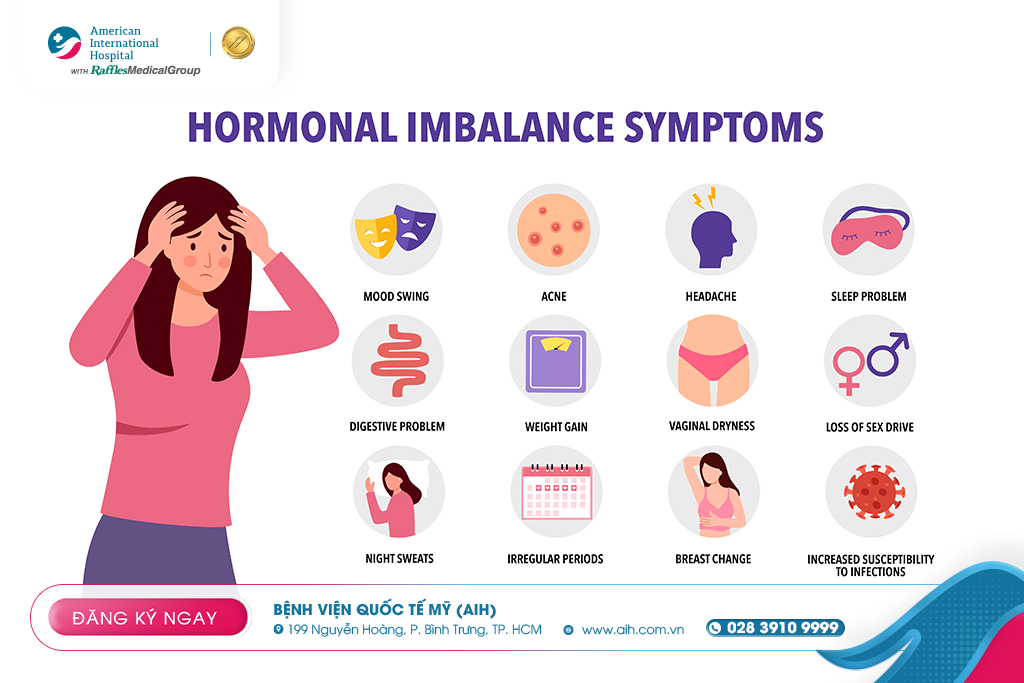
5. Decreased sexual desire, sexual dysfunction
Sex hormones – estrogen in females and testosterone in males – play a decisive role in libido and physiological health. When deficient, females often experience vaginal dryness and decreased pleasure; males may experience erectile dysfunction or reduced sperm count.
6. Hair loss, dry or more sensitive skin
Thyroid hormones, estrogen, and progesterone regulate the activity of hair follicles and sebaceous glands. When imbalanced, hair becomes weak, dry, or falls out excessively, and the skin also becomes prone to peeling, darkening, or increased sensitivity.
7. Skin changes – acne, oily skin, or hyperpigmentation
Increased testosterone levels or fluctuating estrogen-progesterone cause sebaceous glands to become overactive, leading to hormonal acne, especially on the chin and jawline. This is a common symptom in puberty, premenopausal women, or individuals with PCOS.
8. Insomnia, restless sleep
When cortisol, melatonin, or thyroid hormones are disrupted, the body's biological clock is affected, leading to insomnia, waking up in the middle of the night, or feeling tired even after waking.
9. Difficulty concentrating, feeling brain fog
Thyroid hormones and estrogen play a role in maintaining the flexibility of the nervous system. When deficient, you may experience reduced memory, slow reactions, or difficulty concentrating on tasks.
10. Frequent thirst, frequent urination, dry mouth
These could be signs of a disorder of ADH (antidiuretic hormone) or endocrine diabetes, due to abnormal pituitary or pancreatic function.
11. Muscle aches, muscle weakness, or bone pain
When thyroid hormones, cortisol, or growth hormone (GH) are disrupted, the ability to synthesize protein and absorb calcium decreases, making the body prone to aches, muscle weakness, or early osteoporosis.
12. Signs of premenopause – menopause in women
Decreased estrogen and progesterone lead to familiar manifestations such as hot flashes, night sweats, insomnia, vaginal dryness, and mood swings. This is a normal physiological stage, but if symptoms are too severe, an endocrinologist needs to provide treatment support to improve quality of life.
Common causes of hormonal imbalance
Prolonged stress, lack of sleep, overwork
Diet high in sugar, saturated fats, or processed foods
Puberty, pregnancy, premenopause, or menopause
Thyroid, adrenal, or pituitary gland disorders
Prolonged use of birth control pills, hormonal medications, or steroids
Lifestyle factors account for over 60% of mild to moderate hormonal disorders – which can be completely adjusted if detected early

How to treat hormonal imbalance
1. Accurate diagnosis & comprehensive assessment
Before deciding on a treatment method, doctors often perform:
Blood/urine tests to measure hormone levels: thyroid (T3, T4, TSH), cortisol, ACTH, sex hormones (estrogen, testosterone, LH, FSH)…
Imaging if necessary: MRI (especially with suspected pituitary gland), thyroid ultrasound, adrenal CT scan, etc.
Clinical evaluation, patient symptoms, accompanying underlying diseases – to determine which hormones are deficient or excessive, and which gland is affected.
Based on individual criteria (age, overall health, severity) to develop a personalized treatment regimen.
2. Hormone replacement therapy / hormone balance
If there is a hormone deficiency:
Hormone replacement therapy (HRT) to supplement deficient hormones, bringing the body back to a state of balance.
For example: if the thyroid gland is underactive, synthetic T4 hormone (levothyroxine) is used to maintain hormone levels within the normal range.
In cases of hypopituitarism, patients may need multiple hormone replacements because the pituitary gland does not produce enough stimulating hormones.
When there is a deficiency of sex hormones such as estrogen or testosterone, doctors will consider supplementation, depending on the risks and benefits for each patient.
Hormone therapy usually needs to be closely monitored — doses must be adjusted to be just enough, avoiding excess hormones that cause side effects.

3. Causal treatment — Direct intervention
If hormonal imbalance is due to damage or a tumor of an endocrine gland:
Surgery: for example, removal of a pituitary tumor (hypophysectomy) if the tumor causes compression or excessive hormone secretion.
Radiation therapy: if the tumor cannot be completely removed or there is a risk of recurrence, Johns Hopkins may apply radiation therapy to control the tumor and limit excessive hormone production.
In cases of severe thyroid disease or thyroid cancer, partial or total thyroidectomy may be used, combined with radioactive iodine if necessary.
Direct intervention methods are always carefully considered — prioritizing maximum effectiveness and minimizing complications to healthy tissue.
4. Lifestyle adjustment & Adjunctive support
Coordinate lifestyle interventions in parallel with medical treatment:
Balanced nutrition, blood sugar control, limit inflammatory foods
Regular exercise, physical activity helps increase hormone sensitivity
Stress management, good sleep to reduce the impact of cortisol hormone
Regular monitoring: hormone tests, imaging if necessary, adjust hormone dosage according to response
5. Long-term monitoring & Adjustment
After treatment initiation, doctors typically schedule long-term, regular follow-ups—hormone tests, assessment of affected gland function, and evaluation of side effects from hormone therapy or radiation therapy.
When there are changes in health, response to medication, or new symptoms, hormone dosages or supplementary treatments will be adjusted promptly.
The ultimate goal is to maintain hormones within the normal range, control symptoms, and improve the patient's quality of life.
Preventing hormonal imbalance – Starting with small changes
Maintain sufficient and quality sleep
The body needs 7–8 hours of deep sleep for the pituitary and adrenal glands to regenerate hormones, helping to stabilize the biological rhythm.
Balanced diet
Increase green vegetables, whole grains, good fats (omega-3), limit sugar, caffeine, and alcohol. Some foods like salmon, chia seeds, avocado, and eggs are beneficial for endocrine health.

Stress management
Meditation, yoga, walking, or light relaxation activities help reduce cortisol levels – the stress hormone – which is a leading "culprit" causing endocrine disorders.
Moderate exercise
Exercising 30 minutes daily helps improve insulin sensitivity, balance sex hormones, and increase endorphins – "happiness" hormones.
Regular health check-ups and endocrine screening
Checking thyroid hormone levels, blood glucose, pituitary, and ovarian function helps detect abnormalities early before symptoms become apparent.
Reference:
--------------------



Để lại bình luận