


























































Thông báo

CẢM ƠN QUÝ KHÁCH ĐÃ ĐẶT LỊCH KHÁM TẠI AIH.
Quý khách có muốn đăng ký thông tin trước không?
Vui lòng điền vào thông tin bên dưới
Khẩn cấp
DON’T OVERUSE REFLUX MEDICATIONS IF YOU HAVE SIGNS OF ESOPHAGEAL HYPERSENSITIVITY
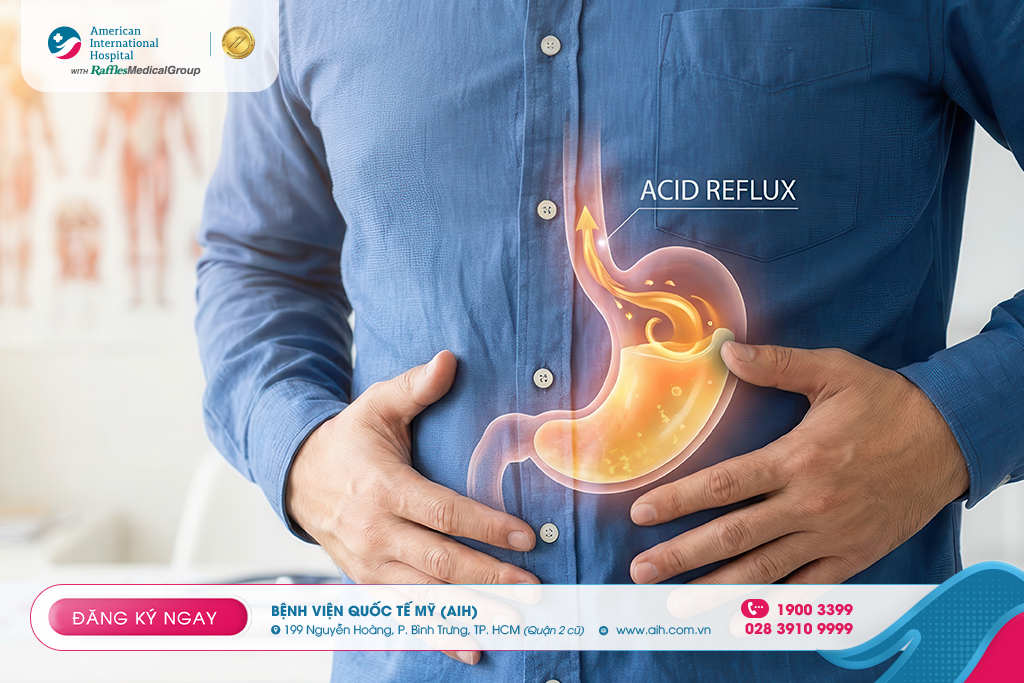
What is happening when you take your medication correctly but still experience pain?
Dr. Mai Vien Phuong, Master’s Degree, Head of the Gastrointestinal Endoscopy Unit at American International Hospital (AIH), states that many patients wonder:
"I have been taking my medication exactly as instructed."
"My endoscopy results show that my esophagus is almost normal."
"But I still experience burning and discomfort every day."
If you also have experienced this situation, there is no need to worry too much, as this is not an uncommon occurrence.
In the past, when symptoms persisted despite treatment, many people assumed that the underlying cause was excessive gastric acid secretion. Therefore, the usual approach was to increase the dosage or extend the duration of acid-suppressive medication.
However, with the advancement of specialized diagnostic methods, physicians have found that gastric acid is not always the cause of persistent symptoms.
In some individuals, the esophagus becomes more sensitive than normal. Even a very small amount of acid, or even completely normal physiological stimuli that occur during eating, can cause a burning sensation, retrosternal pain or pressure, or discomfort that feels like severe acid reflux. This condition is known as esophageal hypersensitivity.
The esophagus – A highly sensitive “sensor”
The esophagus is not merely a tube that transports food from the mouth to the stomach.
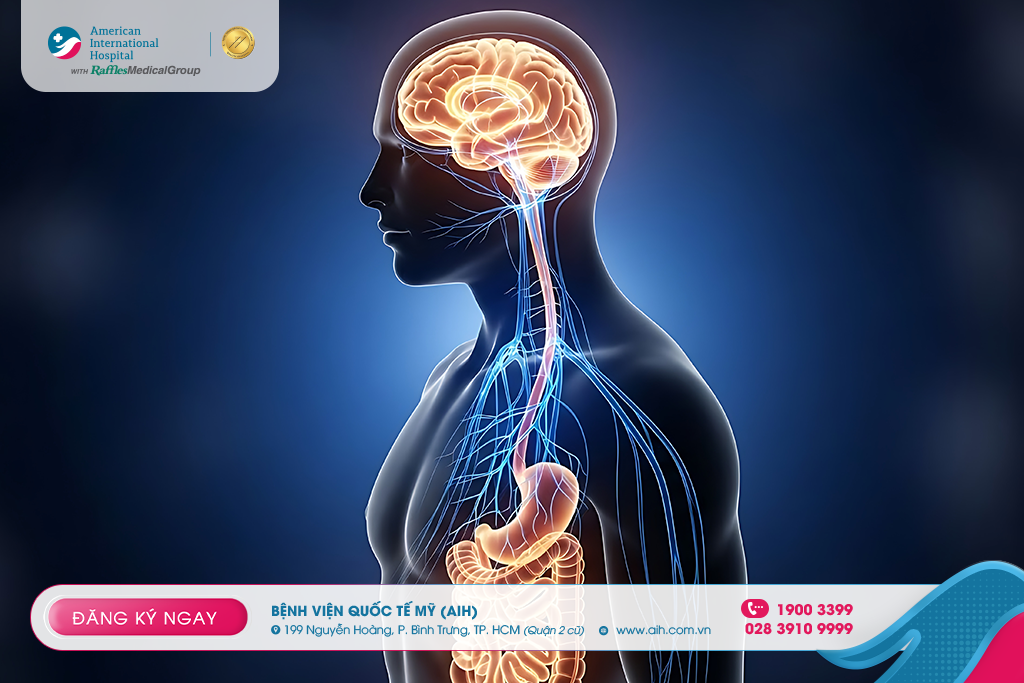
The esophageal wall contains millions of nerve endings that function as tiny sensors. They continuously detect:
The passage of food.
The temperature of the food.
Pressure during swallowing.
Distension and stretching of the esophageal wall.
Small amounts of fluid refluxed from the stomach.
These signals are then transmitted to the brain for processing.
In healthy individuals, the brain “filters out” most normal signals, so we are barely aware of these processes.
You do not feel each sip of water passing through the esophagus.
You also do not notice the physiological episodes of reflux that may occur several times a day.
This is a completely normal bodily function.
To make this easier to understand, imagine that your home has a security alarm system.
Normally, the alarm only goes off when someone actually breaks in. But if the system malfunctions and becomes overly sensitive, even a gust of wind, a cat walking by, or a few falling leaves can be enough to trigger the alarm repeatedly.
It’s not because there is more danger, but because the system is overreacting to completely normal signals.
Esophageal hypersensitivity works in much the same way.
In people with this condition, very minor stimuli, such as a small amount of refluxed fluid, esophageal contractions during swallowing, or even normal physiological changes after a meal can be “amplified” by the nervous system. The brain then interprets these harmless signals as burning, pain or pressure, or discomfort that feels like severe acid reflux, despite the negligible actual injury or amount of acid.

Acid is not always the “culprit”
According to Dr. Mai Vien Phuong, Master’s Degree, many people still believe that the more gastric acid there is, the more severe the reflux symptoms will be. However, the reality is not always that straightforward.
Some individuals experience significant acid reflux yet exhibit only mild symptoms or report virtually no discomfort. Conversely, others experience acid reflux levels within nearly normal limits while still frequently suffering from retrosternal burning, chest tightness, or prolonged discomfort.
This indicates that symptom severity depends not only on the amount of refluxed acid but also on esophageal sensitivity. When the esophagus becomes hypersensitive, even minor stimuli, which would normally cause no discomfort in healthy individuals, can trigger distinct sensations of pain or burning.
This explains why two individuals with nearly identical endoscopic findings or acid monitoring results can have entirely different symptomatic experiences.
Why does the esophagus become hypersensitive?
To date, scientists believe this is the result of a combination of factors.
Prolonged inflammation alters nerve endings
Repeated acid reflux over a long period can cause nerve endings to become more 'vigilant.'
Even when the inflammation has been treated, these nerves may continue to overreact.
The esophagus's protective barrier is compromised
The mucosal surface of the esophagus acts like a thin layer of armor.
When this protective layer is damaged, normally harmless stimuli can more easily reach the nerve endings.
This is why patients experience a burning sensation even when the amount of acid is minimal.
The brain amplifies the pain sensation
The brain does not merely receive signals; it also determines how intensely we perceive pain
In some individuals, the pain-processing system overly operates.
The brain functions like a loudspeaker turned up to maximum volume.
Even a very minor signal generates an intense sensation.
This is a common mechanism observed in many functional gastrointestinal disorders, including esophageal hypersensitivity.
Why is the condition frequently missed?
One of the reasons is the absence of visible lesions upon endoscopy.
Patients often hear their physician state:
“Your esophagus looks entirely normal.”
Following this, they continue to wonder:
“If it is normal, why do I still experience pain?”
In reality, endoscopy only permits the visualization of the macroscopic mucosal surface.
Meanwhile, esophageal hypersensitivity is a disorder related to sensory function rather than visible lesions.
This is precisely why the condition is easily misunderstood or overlooked if reliance is placed solely on endoscopy.
Signs that lead doctors to consider esophageal hypersensitivity
Not all lingering burning sensations after treatment mean that the medication is ineffective or that there is still too much gastric acid. According to Dr. Mai Viễn Phương, Master’s Degree, Head of the Gastrointestinal Endoscopy Unit at the American International Hospital (AIH), during the medical examination, physicians will consider the possibility of esophageal hypersensitivity if the patient exhibits the following characteristics:
Symptoms persist despite correct and adequate medical treatment.
Endoscopy shows that the esophagus has healed or exhibits only very mild inflammation.
Symptoms typically appear after meals or intensify during periods of stress and anxiety.
Chest pain has been evaluated and cardiovascular causes have been ruled out.
Results from pH test or esophageal 24-hour pH-impedance monitoring show that the amount of refluxed acid is not high, yet symptoms coincide precisely with the timing of the reflux episodes.
This information helps doctors accurately identify the cause of the symptoms, thereby choosing an appropriate treatment plan instead of simply increasing the dose or prolonging the duration of acid suppressant use.
Treatment is not about using stronger medications
Many people believe that when symptoms do not improve, they simply need to increase the dosage or switch to a stronger drug. However, this is not always the case.
Dr. Mai Vien Phuong states that if the cause is esophageal hypersensitivity, continuing to increase the dosage of acid-suppressive medication provides little benefit, because the problem at this point lies not in the amount of acid, but in how the esophagus reacts to stimuli.
Therefore, treatment goals will be personalized for each patient, including:
Controlling reflux if still present.
Reducing sensitivity of esophageal nerve system with appropriate medications when indicated.
Modifying dietary habits and lifestyle.
Improving sleep quality.
Managing chronic stress.
Treating concurrent disorders, if any.
Treatment of esophageal hypersensitivity typically requires close coordination between the physician and the patient. When the underlying cause is correctly identified and an appropriate treatment method is chosen, the majority of patients can better control their symptoms and improve their quality of life.
What can patients do to support their treatment?
In addition to following their doctor’s instructions, patients should:
Eat meals on time and avoid overeating.
Limit lying down immediately after meals.
Maintain a healthy weight.
Get adequate sleep.
Exercise regularly.
Learn how to manage stress.
Do not arbitrarily increase or discontinue medication.
These seemingly simple changes can significantly reduce the frequency of symptoms.

Dr. Mai Vien Phuong, Master’s Degree, emphasizes that treating reflux is not merely about prescribing medication or increasing the dosage when symptoms persist. The most important thing is to accurately identify the underlying cause of discomfort in each individual patient.
At the Department of Gastroenterology, American International Hospital (AIH), patients have access to a comprehensive diagnostic process to differentiate between conditions with similar symptoms, such as gastroesophageal reflux disease (GERD), esophageal hypersensitivity, functional heartburn, or esophageal motility disorders.
The high-resolution Olympus endoscopy system helps accurately detect lesions such as esophagitis, Barrett's esophagus, and other abnormalities. In cases where endoscopy reveals no lesions but symptoms persist, physicians may prescribe further specialized investigations, such as esophageal pH monitoring or esophageal 24-hour pH-impedance monitoring, to determine the disease mechanism and select the appropriate treatment strategy.
With a personalized approach, the Department of Gastroenterology at the American International Hospital aims not only to manage immediate symptoms but also to help patients minimize unnecessary medication use, improve their quality of life, and accompany them long-term in their digestive health care journey.
Things to remember
Esophageal hypersensitivity is a condition where the esophagus overreacts to normal stimuli, which is not always caused by excessive gastric acid.
A normal endoscopy does not mean the absence of disease or the lack of a cause for symptoms.
The severity of burning or chest pain does not accurately reflect the degree of esophageal damage.
Increasing medication dosage does not always help improve symptoms if the underlying cause is esophageal hypersensitivity.
Accurate diagnosis of the cause and personalized treatment are the keys to effectively controlling symptoms, limiting unnecessary treatments, and improving quality of life.
References
Sawada A, Sifrim D, Fujiwara Y. Esophageal Reflux Hypersensitivity: A Comprehensive Review. Gut and Liver. 2023;17(6):831–842.
--------------------



Để lại bình luận