



























































Thông báo

CẢM ƠN QUÝ KHÁCH ĐÃ ĐẶT LỊCH KHÁM TẠI AIH.
Quý khách có muốn đăng ký thông tin trước không?
Vui lòng điền vào thông tin bên dưới
Khẩn cấp
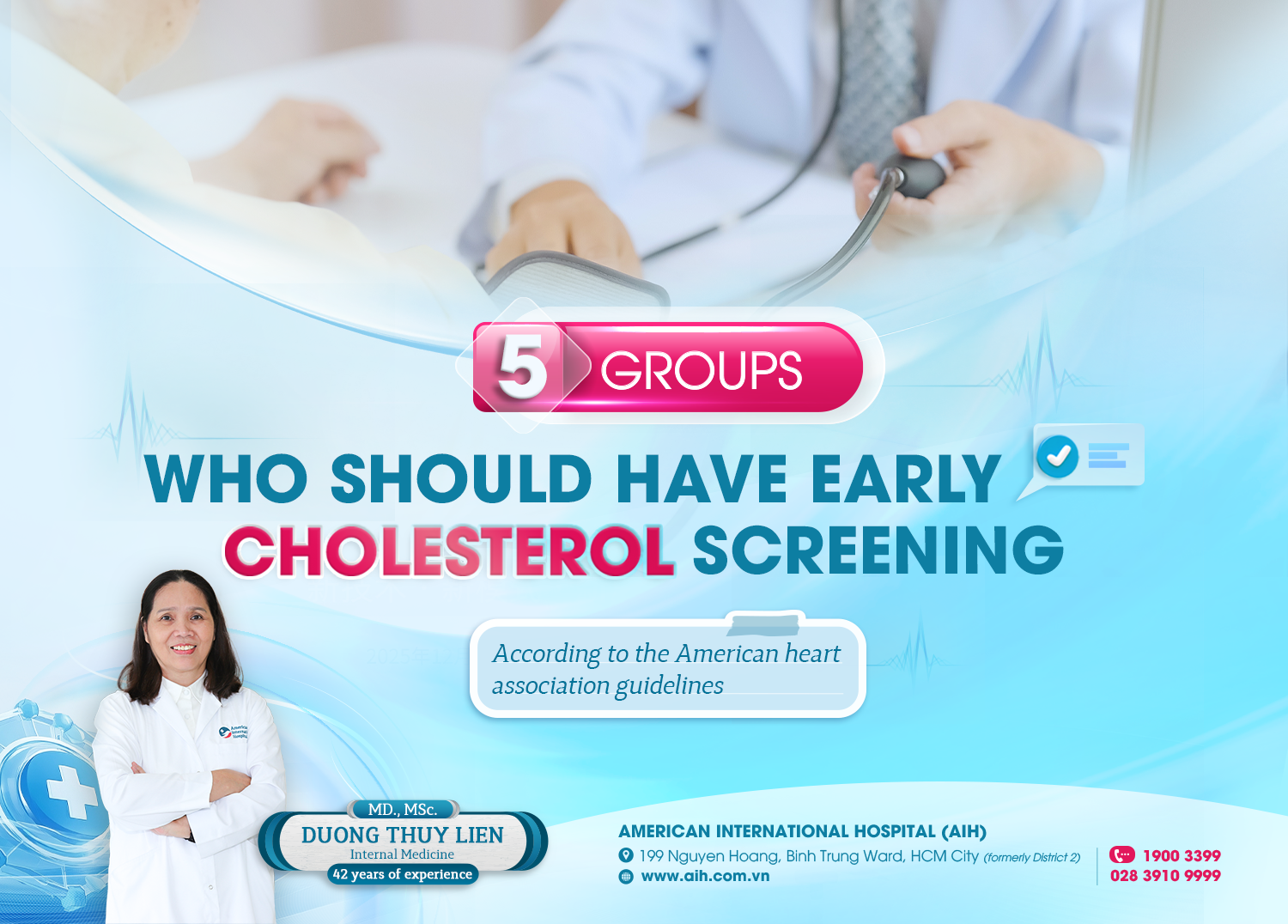
5 GROUPS WHO SHOULD HAVE EARLY CHOLESTEROL SCREENING ACCORDING TO THE AMERICAN HEART ASSOCIATION GUIDELINES
Dyslipidemia is one of the leading causes of atherosclerosis, myocardial infarction, and stroke. Notably, many people with high cholesterol may remain asymptomatic for years, while their cardiovascular risk gradually increases over time.
According to updated guidelines from the American Heart Association and the American College of Cardiology, cholesterol screening should begin earlier and be individualized based on each person’s cardiovascular risk profile. Below are five groups who should undergo early lipid screening to detect cardiovascular risk factors.
1. Adults aged 30 years and older
The updated guidelines recommend beginning cardiovascular risk assessment at age 30, especially in individuals with LDL cholesterol levels between 70–189 mg/dL.
Physicians may use risk assessment tools such as PREVENT-ASCVD to estimate the likelihood of cardiovascular events occurring within the next 10 years.
Early screening helps:
Detect underlying dyslipidemia
Allow timely lifestyle interventions
Reduce the risk of atherosclerosis
2. Individuals with a family history of premature cardiovascular disease
Your cardiovascular risk may be significantly higher than that of the general population if you have family members with:
Early myocardial infarction
Early stroke
Death from cardiovascular disease before age 55 (in men) or before age 65 (in women)
These individuals should have regular cholesterol screening to timely detect familial hypercholesterolemia or other inherited lipid disorders.
3. Individuals with metabolic disorders
Metabolic disorders that could increase the risk of dyslipidemia include:
Type 2 Diabetes Mellitus
Overweight/Obesity
Metabolic syndrome
Metabolically-dysfunction-associated fatty liver disease
In these patients, elevated cholesterol levels are often associated with insulin resistance and chronic inflammation, accelerating the development of atherosclerosis.
Therefore, regular lipid testing is a crucial step in preventing cardiovascular complications.
4. Women with a history of high-risk pregnancy
The 2026 guidelines emphasize that pregnancy complications could be early indicators of future cardiovascular risk.
Women with a history of the following conditions should undergo early cholesterol screening:
Preeclampsia
Gestational diabetes
Preterm delivery before 37 weeks
Small-for-gestational-age infants
Recurrent miscarriage
These complications are associated with endothelial dysfunction and abnormalities in lipid metabolism, which may increase future cardiovascular risk.
5. Individuals with lifestyle factors that could increase cardiovascular risk
Certain lifestyle factors could also contribute to elevated cholesterol levels and promote atherosclerosis, including:
Smoking
Physical inactivity
A diet high in saturated fat
Chronic stress
Poor sleep or sleep disorders
In individuals with multiple risk factors, lipid testing helps physicians assess cardiovascular risk early and develop appropriate preventive strategies.
How does cholesterol screening help to prevent cardiovascular disease?
According to cardiovascular experts, early detection of dyslipidemia could help:
Reduce the risk of myocardial infarction
Reduce the risk of stroke
Slow the progression of atherosclerosis
Improve life expectancy and life quality
Cholesterol management typically includes:
Dietary modifications
Increased physical activities
Weight control
Cholesterol-lowering medications when necessary
What cholesterol levels are considered dangerous?
Cholesterol is a type of fat that is essential for the body. However, when blood cholesterol levels become excessively high, cholesterol can accumulate within arterial walls and lead to atherosclerosis.
According to the cardiovascular experts, it is important to not only evaluate total cholesterol, but also other parameters such as LDL, HDL, and triglycerides.
Below are the cholesterol ranges commonly used to assess cardiovascular risk.
1. LDL cholesterol – “bad cholesterol”
LDL cholesterol is the most important factor associated with cardiovascular risk.
| LDL Level | Assessment |
| <100 mg/dL ( <2.6 mmol/L) | Optimal |
| 100–129 mg/dL (2.6–3.3 mmol/L) | Near optimal |
| 130–159 mg/dL (3.4–4.1 mmol/L) | Borderline high |
| 160–189 mg/dL (4.1–4.9 mmol/L) | High |
| ≥190 mg/dL (≥4.9 mmol/L) | Very high – requires intensive treatment |
If LDL ≥190 mg/dL (≥4.9 mmol/L), patients often require immediate cholesterol-lowering therapy because the risk of atherosclerosis is very high.
2. HDL cholesterol – “good cholesterol”
HDL helps transport excess cholesterol away from the arteries.
| HDL Level | Assessment |
| <40 mg/dL (<1.0 mmol/L) in men | Low |
| <50 mg/dL (<1.3 mmol/L) in women | Low |
| ≥60 mg/dL (≥1.6 mmol/L) | Cardioprotective |
The higher the HDL level, the lower the risk of cardiovascular disease.
3. Triglycerides
Triglycerides are a form of stored fat in the body. High levels are commonly associated with:
Obesity
Insulin resistance
Metabolic syndrome
| Triglyceride Level | Assessment |
| <150 mg/dL (<1.7 mmol/L) | Normal |
| 150–199 mg/dL (1.7–2.2 mmol/L) | Borderline high |
| 200–499 mg/dL (2.3–5.6 mmol/L) | High |
| ≥500 mg/dL (≥5.6 mmol/L) | Very high |
Very high triglyceride levels could increase the risk of acute pancreatitis.
Important note: cardiovascular risk is not determined by a single number
The updated guidelines emphasize that physicians should assess overall cardiovascular risk, including:
Age
Blood pressure
Smoking status
Diabetes mellitus
Family history of cardiovascular disease
These factors are combined to estimate the risk of atherosclerotic cardiovascular disease, which helps determine whether cholesterol-lowering medication is necessary.
Message:
High cholesterol often causes no obvious symptoms, but it can silently increase the risk of cardiovascular disease over many years. Therefore, regular lipid testing is a crucial step in protecting long-term cardiovascular health.
--------------------



Để lại bình luận