
























































Notification

THANK YOU FOR MAKING AN APPOINTMENT AT AIH.
Would you like to pre-register?
Please fill in the information below
Urgent
WHAT IS REFRACTORY GASTROESOPHAGEAL REFLUX DISEASE?

When appropriate treatment does not resolve the condition – why?
After several weeks of treatment, MSc, MD Mai Vien Phuong, Head of the Gastrointestinal Endoscopy Unit at American International Hospital (AIH), said that most people with gastroesophageal reflux disease (GERD) experience a significant reduction in symptoms such as retrosternal burning, acid regurgitation, or chest discomfort.
However, in practice, there is still a group of patients whose symptoms persist or improve only minimally despite taking their medication regularly for several weeks or even months.
Many patients begin to worry:
Is my condition too severe?
Has the medication stopped working?
Do I need to switch to a stronger medication?
Will I have to take medication for the rest of my life?
In fact, such cases are not uncommon. In gastroenterology, this condition is referred to as refractory gastroesophageal reflux disease (GERD) or refractory reflux.
Importantly, “refractory” does not mean that the condition cannot be treated. Rather, it indicates that the patient needs to be reassessed to identify the underlying reason why treatment has not achieved the desired effect.
What is refractory reflux?
According to Dr. Phuong, refractory reflux refers to a condition in which patients continue to experience reflux symptoms despite receiving appropriate medication at the appropriate dosage and for a sufficient duration.
Typically, doctors assess treatment response after approximately 8 weeks of treatment with acid-suppressive medication.
If, after this period, the patient continues to experience:
Retrosternal burning.
Heartburn.
Acid regurgitation.
Esophageal-related chest pain.
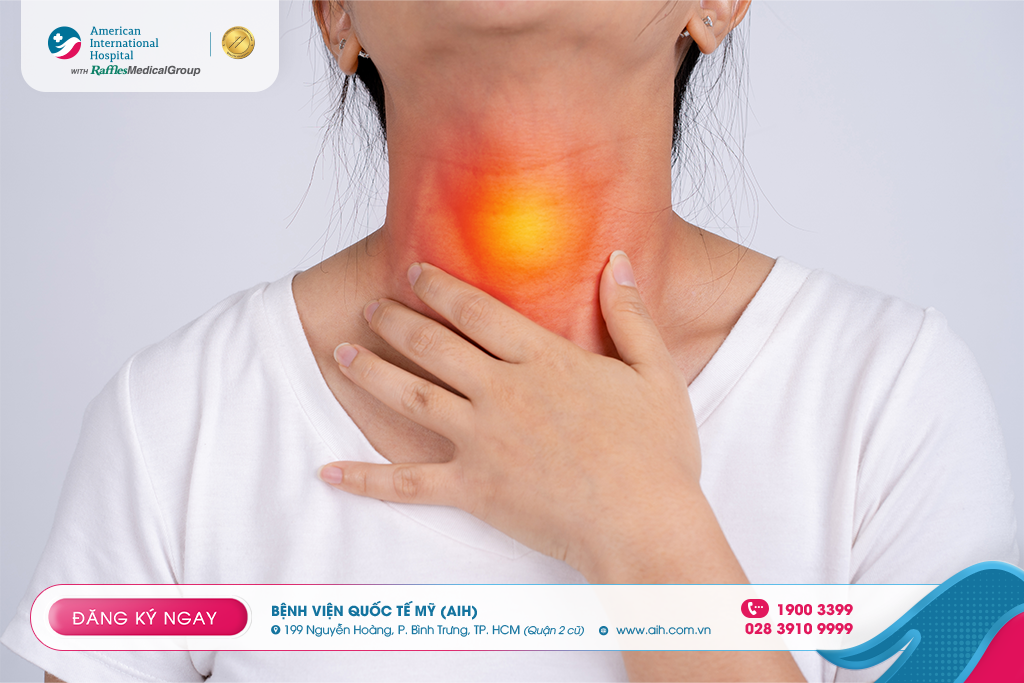
Persistent burning or discomfort.
...the underlying cause should be investigated rather than simply continuing medication for a longer period.
Not All Cases Are “Refractory”
This is a point that many people do not fully understand.
When they hear the term “refractory,” many people immediately assume that their body has “become resistant to the medication” or that the medication is no longer effective.
In reality, most cases are not due to the medication losing its effectiveness.
More common causes include:
The medication has not been used correctly.
The initial diagnosis was inaccurate.
The symptoms are caused by another condition.
The patient has increased esophageal sensitivity.
Therefore, rather than continuously changing medications, the physician will reassess the entire treatment process.
Does Persistent Heartburn Mean That Inflammation Is Still Present?
Dr. Mai Vien Phuong explains that a burning sensation does not always mean that inflammation is still present. This is a relatively common misconception among patients.
In fact, after treatment and a follow-up endoscopy, there are cases in which the esophageal mucosa has almost completely healed, while the patient still experiences a burning sensation and discomfort.
This shows that symptoms and the degree of mucosal damage do not always correspond.
Some people may have significant esophagitis but relatively mild symptoms. Conversely, in some cases, the endoscopic findings may be almost normal, while the burning sensation remains very pronounced.
That is why physicians do not rely solely on symptoms to assess treatment effectiveness.
Why Do Symptoms Persist Despite Taking Medication?
Persistent symptoms despite taking medication can have many different causes.
In clinical practice, doctors typically consider the following possibilities:
1. The medication is not being taken correctly
This is a simple but very common cause.
For example:
Taking the medication after meals.
Forgetting to take the medication.
Not taking the medication regularly.
Discontinuing the medication without medical advice.
These seemingly minor mistakes can significantly reduce treatment effectiveness.
2. Acid reflux is still occurring
Some people experience severe reflux.
Although medication may reduce the amount of acid, it may not completely control acid reflux.
In such cases, the doctor may consider adjusting the treatment regimen or conducting further evaluation with specialized tests.
3. Refluxate contains more than just acid
Many people think that refluxate consists only of acid.
In reality, this is not the case.
Gastric contents may also contain:
Bile.
Digestive enzymes.
Food.
Gas.
Even when acid levels have been reduced, these components may still cause discomfort in some people.
4. The esophagus becomes hypersensitive
This is an increasingly recognized cause.
After years of exposure to acid, the nerve endings in the esophagus may become more sensitive than normal.
At this point, even a very small amount of refluxate may be enough to cause a burning sensation.
This can be compared to sunburned skin.
When the skin is healthy, a light touch causes little to no sensation.
But when the skin is damaged, even the slightest touch can cause a stinging or burning sensation.
A similar phenomenon can occur in the esophagus.
5. The Patient May No Longer Actually Have Reflux
Dr. Mai Vien Phuong notes that this is not an uncommon situation and is something that may surprise many patients.
Some people were diagnosed with reflux many years ago. After treatment, acid exposure has been controlled and returned to normal levels, but the sensation of burning or discomfort continues to occur.
In such cases, the cause may be related to esophageal hypersensitivity, functional heartburn, or esophageal motility disorders.
Without reassessing the underlying cause, patients may continue taking acid-suppressive medications for a prolonged period without significant improvement in their symptoms.
Who Is More Likely to Experience This Condition?
Certain groups may be at higher risk:
People who have had reflux for many years.
People with obesity.
People with a hiatal hernia.
People who smoke regularly.
People who frequently consume alcohol.
People who regularly stay up late.
People experiencing prolonged stress.
People with irritable bowel syndrome (IBS) or other functional gastrointestinal disorders.
However, belonging to a high-risk group does not necessarily mean that a person will develop refractory reflux.

Do You Need to Have Another Endoscopy?
Not every case requires immediate repeat endoscopy.
If symptoms persist after treatment, the doctor will consider:
Duration of medication use.
Treatment response.
Age.
Alarm symptoms.
In many cases, endoscopy can help assess:
Whether esophagitis is still present or has healed.
Whether Barrett’s esophagus is present.
Whether there are esophageal ulcers or strictures.
Whether another condition may be causing the symptoms.
If the endoscopy results are normal but symptoms persist, the doctor may order additional specialized tests.
Do Not Change Your Medication Without Knowing the Cause
According to Dr. Mai Vien Phuong, a relatively common mistake is for patients to purchase additional medication on their own or switch to a different medication when they notice that their symptoms have not improved, assuming that their current medication is no longer effective.
This may not only increase treatment costs but, more importantly, may result in the underlying cause of the symptoms being overlooked or delay an accurate diagnosis.
In some cases, what the patient needs is not a new medication, but a reassessment to establish a more accurate diagnosis.
Refractory Treatment Is Not Just About Increasing the Medication Dose
In the past, when patients did not respond to treatment, one of the approaches commonly considered was increasing the medication dose.
However, the current approach places greater emphasis on reassessing the underlying cause of the symptoms.
The doctor will try to answer several important questions:
Does the patient actually still have reflux?
Is acid exposure still elevated, or has it returned to normal?
Is there esophageal hypersensitivity?
Is there an esophageal motility disorder?
Is there another condition causing similar symptoms?
Once these questions are answered, treatment can be much more effective.
When Should You See a Gastroenterologist?
You should see a doctor if:
You have received appropriate treatment for 8 weeks or longer, but your symptoms persist.
You need to take medication continuously to obtain relief.
Your symptoms recur frequently.
Your endoscopy results are normal, but you continue to experience burning sensations.
You have difficulty swallowing, unexplained weight loss, or persistent chest pain.
Seeking medical attention early can help identify the underlying cause, avoid unnecessary long-term medication use, and reduce the risk of overlooking other conditions.
At the Department of Gastroenterology at American International Hospital (AIH), each case of persistent or recurrent reflux, or reflux that does not respond to treatment as expected, is comprehensively reassessed by a physician to identify the underlying cause of the symptoms.
With a high-resolution Olympus endoscopy system, physicians can closely examine the esophageal mucosa and detect lesions such as esophagitis, Barrett’s esophagus, and other abnormalities of the upper gastrointestinal tract. When symptoms persist but endoscopy findings are insufficient to explain the cause, patients may be considered for additional appropriate specialized investigations.
This allows physicians to distinguish between gastroesophageal reflux disease, esophageal hypersensitivity, functional heartburn, and esophageal motility disorders, and consequently select a more appropriate treatment approach for each individual case.
Identifying the underlying cause is the foundation of appropriate treatment. It helps limit unnecessary long-term medication use and enables patients to achieve sustainable symptom control and improve their quality of life.
Key Takeaways
Refractory reflux does not mean that the condition cannot be treated.
In most cases, it is not because the body has “become resistant to the medication.”
The most important step is to identify the underlying cause of persistent symptoms.
Do not increase the medication dose or switch medications without being reassessed by a doctor.
An accurate diagnosis is the foundation of effective treatment.
References:
Sawada A, Sifrim D, Fujiwara Y. Esophageal Reflux Hypersensitivity: A Comprehensive Review. Gut and Liver. 2023;17(6):831–842.
--------------------



Leave a comment